
Balcony & Terrace Floor Wastes
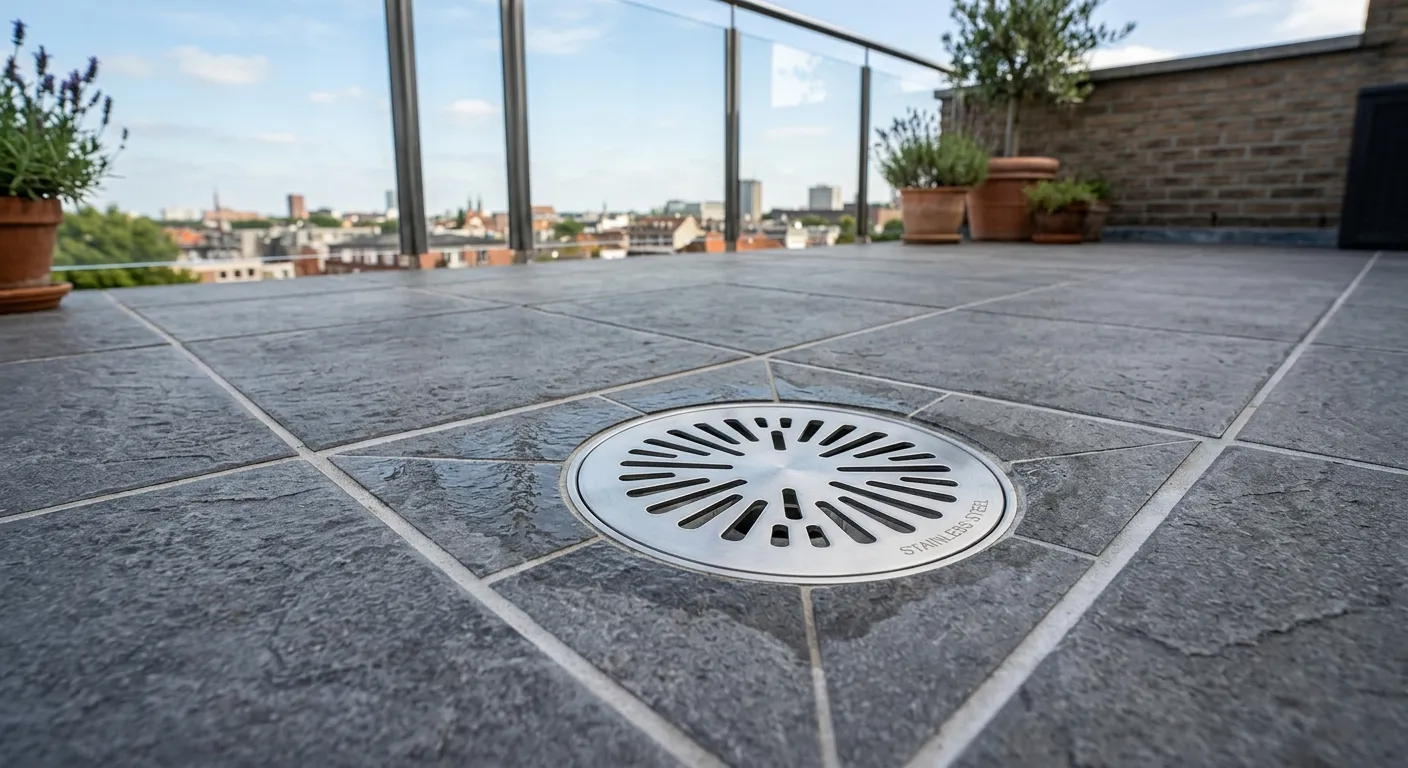
Weather-resistant floor drains designed for outdoor balconies, terraces, and patios. Built to withstand UV exposure, temperature variations, and heavy rainfall.
Key Features
- UV-resistant stainless steel construction
- High-flow capacity for heavy rainfall
- Corrosion-resistant for outdoor exposure
- Leaf and debris catcher basket
- 304 or 316 stainless steel options
- Frost-resistant design
- Anti-slip grate options
- Easy access for seasonal cleaning
Materials & Specifications
Available Materials
Ideal For
Product Details
Technical Specifications
| Flow Rate | 25-35 L/min (depending on size) |
| Outlet Size | 50mm (standard), 75mm (large capacity) |
| Water Seal Depth | 50mm (standard), optional waterless trap |
| Sizes Available | 100x100mm, 150x150mm, 200x200mm |
| Material Options | 304 Stainless Steel (standard), 316 Stainless Steel (coastal) |
| Temperature Range | -20°C to +60°C |
| UV Resistance | Excellent (stainless steel does not degrade in UV) |
| Debris Catcher | Integrated removable basket |
Installation Guide
Sourcing Outdoor Drains for a Project?
Get material recommendations, flow calculations, and competitive pricing for your balcony and terrace drainage.
Request QuoteRelated Products
Bathroom Floor Wastes
Specialized floor wastes designed for bathroom wet room installations. Features compact design with efficient drainage and odor prevention. Available in round and square designs.
Learn more →Waterless Trap Inserts (EAD 180020)
Innovative waterless trap inserts that use a floating membrane seal to prevent odors without requiring water. Perfect for water conservation projects and freeze-prone environments.
Learn more →Mechanical Odor Traps (EN 1253-7)
EN 1253-7 compliant mechanical odor traps that automatically seal to prevent sewer gases from entering buildings. Ideal for seldom-used floor drains where water seals may dry out.
Learn more →Frequently Asked Questions
Which material is best for balcony drains in coastal areas?
For coastal or marine environments (within 1-2km of the shoreline), we strongly recommend 316 stainless steel balcony drains. The 316 grade contains 2-3% molybdenum, which provides superior resistance to salt spray and chloride-induced pitting corrosion. In our experience, 304 stainless steel balcony drains in coastal locations typically develop surface rust spots within 2-3 years, while 316 grade maintains its appearance for 10+ years even in direct ocean exposure. The price difference between 304 and 316 is approximately 15-25%, which is a small investment compared to the cost of replacing corroded drains.
How do I prevent balcony drains from clogging with leaves and debris?
Our balcony and terrace floor wastes come with an integrated leaf and debris catcher basket positioned below the grate. This basket captures leaves, twigs, dirt, and other debris before they enter the plumbing system. Maintenance involves: (1) Lifting the grate (no tools required); (2) Removing the basket; (3) Emptying the debris; (4) Rinsing the basket and replacing it. We recommend cleaning the basket monthly during leaf-fall season (autumn) and quarterly during other seasons. For balconies with overhanging trees, consider installing a leaf guard mesh over the grate to catch debris before it enters the drain.
Are these drains frost-resistant for cold climates?
Yes, our stainless steel balcony drains are frost-resistant. The 304/316 stainless steel construction handles freeze-thaw cycles without cracking, deforming, or losing structural integrity — unlike plastic (PVC/PP) drains that can become brittle and crack in freezing temperatures. However, the water in the standard 50mm water seal can freeze in sub-zero temperatures, which temporarily compromises the odor seal. For balconies in cold climates, we recommend installing our waterless trap insert, which contains no water and therefore cannot freeze. The waterless trap maintains its seal regardless of temperature, making it ideal for unheated balconies and terraces in cold climates.
What slope is required for balcony drainage?
Building codes in most jurisdictions require a minimum slope of 1:80 (1.25%) to 1:50 (2%) from the building facade toward the drain. This slope ensures water flows away from the building (preventing water ingress through wall-floor junctions) and toward the drain for efficient removal. For large terraces (over 25 sqm), multiple drains with defined drainage zones are recommended, each with its own slope pattern. In tropical climates with heavy rainfall, a steeper slope of 1:50 to 1:40 (2-2.5%) is recommended to handle higher water volumes. Always consult local building codes for specific requirements in your market.
Can balcony drains be connected to the building's waste system?
This depends on local building codes. In many jurisdictions, balcony drains can either: (1) Discharge to the exterior (open drainage) if the volume is manageable and the discharge point is properly detailed — this is common for small balconies; (2) Connect to the building's stormwater plumbing system — this is required for multi-story buildings and large terraces. Our drains work with both configurations. If connecting to a waste system, ensure the drain has a water seal (or waterless trap insert) to prevent sewer gases from entering the balcony area. If discharging to exterior, a water seal is not strictly necessary but is still recommended to prevent insect entry.
How many drains do I need for a large terrace?
The number of drains depends on terrace area, local rainfall intensity, and architectural constraints. As a general guideline: (1) Temperate climates (normal rainfall): 1 drain per 15-25 sqm with proper slope; (2) Tropical climates (heavy rainfall): 1 drain per 10-15 sqm; (3) Arid climates (rare rainfall): 1 drain per 25-40 sqm. For a 50 sqm terrace in a temperate climate, we recommend 2-3 drains positioned to create efficient drainage zones. Each drain should have a clear slope path from its drainage zone, with no flat areas or low spots where water could pool.
Request Balcony & Terrace Floor Wastes Samples & Pricing
Get product samples, technical datasheets, and competitive OEM pricing from our team.